AI for Unbiased Performance Reviews: 5 Data-Driven Ways to Remove Bias at Work
AI is fixing the broken performance review. Discover how data-driven techniques are used to eliminate bias based on gender, connections, and time, making the system more equitable for everyone.
Catch Up AI Team

Performance reviews have long been criticized for being biased, subjective, and inconsistent. Real contributions are frequently overshadowed by elements like unconscious stereotypes, recency bias, and favoritism. AI in performance management is revolutionizing this process today by providing businesses with more precise, equitable, and useful data.
This article will examine five ways AI is assisting managers and HR teams in conducting objective performance reviews, removing bias, providing fair employee evaluations, and emphasizing impact over perception.
The Persistent Problem of Bias in Performance Reviews
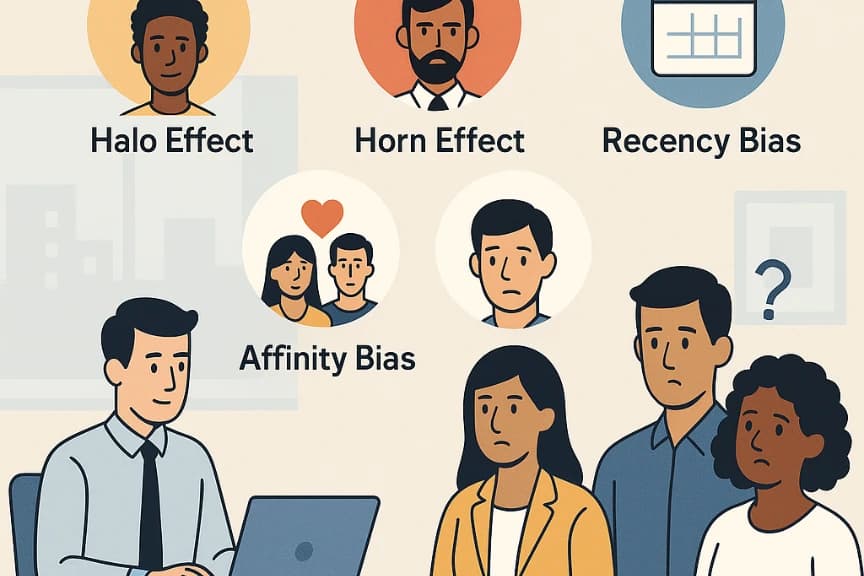
Before exploring AI's solutions, it's crucial to understand the general nature of bias. Traditional performance assessments frequently depend on the opinions of certain supervisors, who are subject to a variety of cognitive biases. For instance, the "halo effect" might cause a manager to rate an employee highly across all areas because of one strong trait, while the "horn effect" does the opposite. "Affinity bias" leads to favoring those similar to oneself, and "recency bias" disproportionately weighs recent events over an entire performance period. These biases not only undermine the accuracy of feedback but can also lead to inequitable compensation, promotion decisions, and overall employee morale. There has never been a more pressing need for AI to conduct objective performance reviews.
1. Analyzing Objective Data, Not Subjective Memory
One of the biggest challenges in traditional reviews is the reliance on a manager's memory. Even the most dedicated leader can't recall every success or challenge from the past six or twelve months. This often leads to recency bias, where an employee's performance in the weeks leading up to the review disproportionately influences their entire evaluation.
How does AI solve the problem of recency bias?
AI-powered platforms like Catch Up AI integrate directly with the digital tools your organization already uses—from project management software like Jira, and communication hubs like Slack, Zoom, or GitHub. Instead of relying on flawed human memory, the AI continuously and passively gathers objective data points.
Quantitative Metrics: It tracks verifiable Key Performance Indicators (KPIs) such as sales quotas achieved, code commits, customer satisfaction scores, and project deadlines met.
Qualitative Contributions: It can analyze project discussions to identify key collaborators, problem-solvers, and idea generators over the entire review cycle.
The system creates a thorough, fact-based account of an employee's performance by combining this constant stream of data. The review is no longer a story told from memory but a report built on facts, effectively helping to remove recency bias and ensuring consistent recognition of performance from the first day of the cycle to the last.
2. Standardizing Evaluation Criteria for All Employees
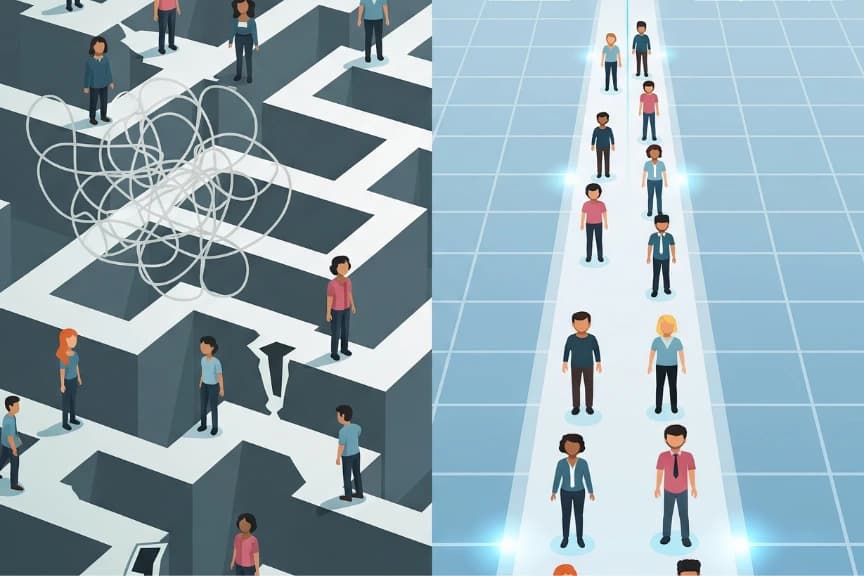
Inconsistency promotes distrust. When various managers use different standards to evaluate success, the entire performance management process feels unpredictable and unfair. One manager can emphasize creativity above everything, while another values respect to procedure. This "moving goalpost" phenomenon makes it impossible to compare performance accurately across teams and can lead to accusations of preference.
AI ensures consistency. The platform is designed with your organization's specific core competencies and role-based expectations. When it is time for a review, the system requires managers to evaluate every employee against these identical, set metrics. This systematic framework stops managers from deviating off-course and using personal, subjective criteria. This creates a level playing field where every evaluation relies on shared corporate principles and job requirements, not a manager's personal preferences.
3. Identifying and Flagging Biased Language
The words we choose have a huge impact. Written feedback is often filled with unconscious biases that encourage opposing workplace stereotypes. Many studies show that women are more likely to receive ambiguous, personality-oriented feedback (e.g., "You're a great team player" or "You can be too aggressive"), while men receive specific, action-oriented feedback connected to skills and company results (e.g., "Your analysis drove the client's decision").
AI addresses this directly using Natural Language Processing (NLP). These algorithms were programmed on massive data sets to identify and highlight potentially biased wording as the manager is writing.
How does AI detect biased feedback?
The AI acts as a real-time coach, scanning the text for:
Gendered or Vague Language: Identifying terms like "bossy" for women vs "assertive" for men, or requesting for evidence when a manager writes "good attitude."
Unactionable Criticism: Highlighting comments that target personality instead of behavior. Instead of allowing "lacks confidence," the AI may propose rephrasing to focus on a particular, coachable action like, "I encourage you to present your results in the next two team meetings."
This feature assists managers toward offering feedback that is objective, specific, and encouraging for all workers, ensuring the focus stays directly on performance and growth.
4. Providing a 360-Degree View of Contributions
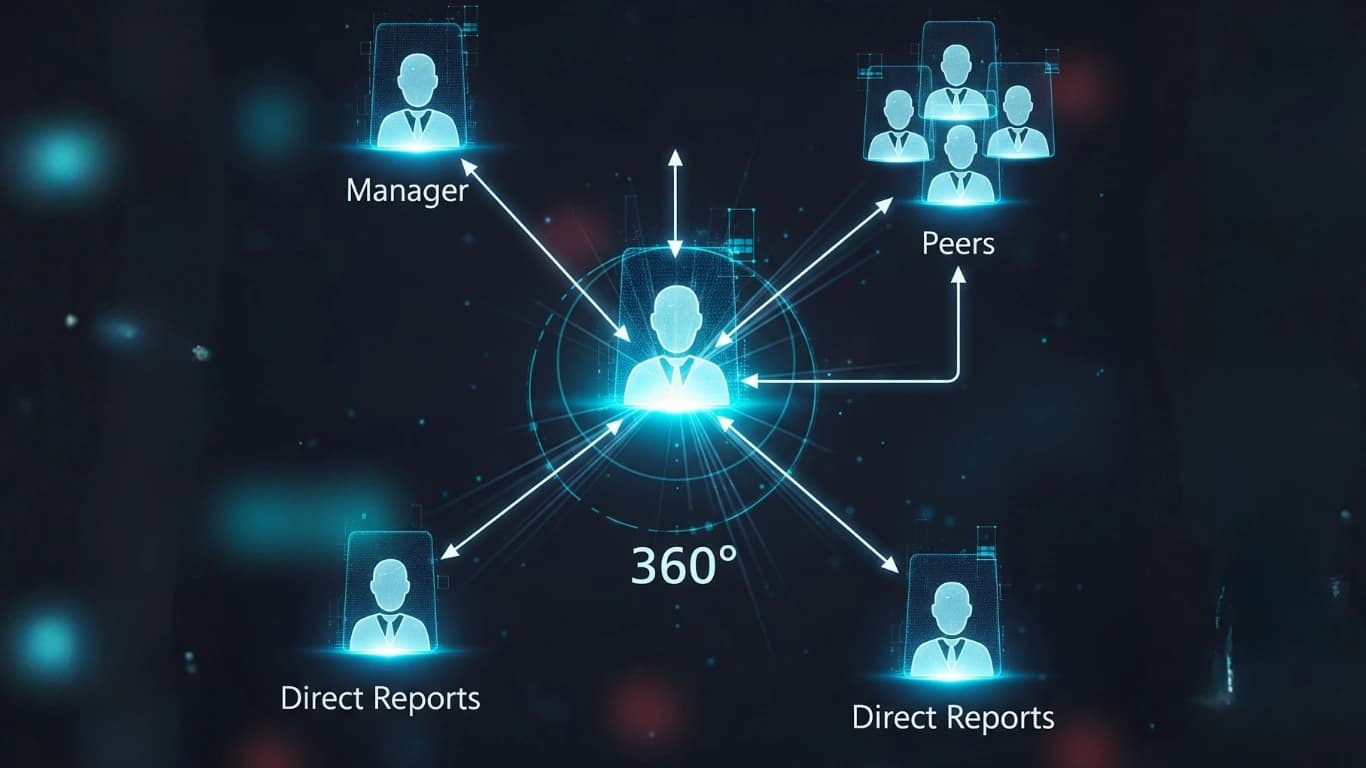
A manager's viewpoint can be insufficient. They may not notice an employee's essential mentorship of a new hire, their teamwork with another department, or their leadership during a crisis they weren't part of. Relying only on a top-down review creates significant blind spots.
AI in Performance Management performs well in building a complete, 360-degree perspective of an employee's effect. The platform automates and simplifies the collection of multi-source feedback:
Peer Feedback: Colleagues can comment on collaboration and teamwork.
Direct Reports: Team members can provide feedback on their manager's leadership.
Cross-Functional Partners: Stakeholders from different teams can discuss an employee's effect on shared projects.
The AI will then automatically synthesis this feedback, recognizing repeating themes and delivering a balanced summary. This democratizes the review process, painting a far more accurate picture of an employee's total value to the organization.
5. Focusing on Impact and Outcomes
Ultimately, performance should be analyzed by its influence on the business. Traditional assessments might get interrupted by subjective personality attributes or effort that doesn't transfer into results. An employee could be generally appreciated and always active, but are they moving forward on crucial company objectives?
AI shifts the focus from activity to outcomes. By combining with goal-setting frameworks like Objectives and Key Results (OKRs), data-driven evaluations link an employee's daily work to the company's strategic goals. The AI platform shows progress against these goals, making it obvious how an individual's efforts have influenced team and company performance.
For example, instead of a manager writing, "Sarah worked hard on the marketing campaign," the AI-powered system can present data showing: "Sarah's A/B testing strategy for the Q3 campaign increased lead conversion by 15%, directly contributing to the team's goal of generating 500 new MQLs." This data-first approach makes interactions more productive and forward-looking, focusing on real results and linking people's efforts with business performance.
Conclusion: The Future is Fair: Embrace AI in Your Review Process
Adopting AI for unbiased performance reviews is more than a process improvement—it's a cultural statement. It shows your employees that you are committed to fairness, honesty, and real competitiveness. By grounding evaluations in objective data, standardized criteria, and measurable outcomes, you can transform a once-dreaded process into a powerful engine for employee growth, engagement, and loyalty. When people trust the process, they are empowered to do their best work.
Ready to build a fairer, more effective review process?
Book a demo of Catch Up AI to see how it works.
window.location.href = '/book-demo'}
className="bg-white text-blue-600 px-8 py-3 rounded-lg font-semibold text-lg hover:bg-blue-50 transition-colors shadow-lg"
>
Book a Demo