
How to Measure Cycle Time per Workflow State in Azure DevOps
Learn how to measure Azure DevOps cycle time per workflow state, identify bottlenecks with cumulative flow, and find where delivery work actually waits.
September 24, 2026
A practical HR guide to workplace AI, governance, human oversight, and responsible performance-related workflows.
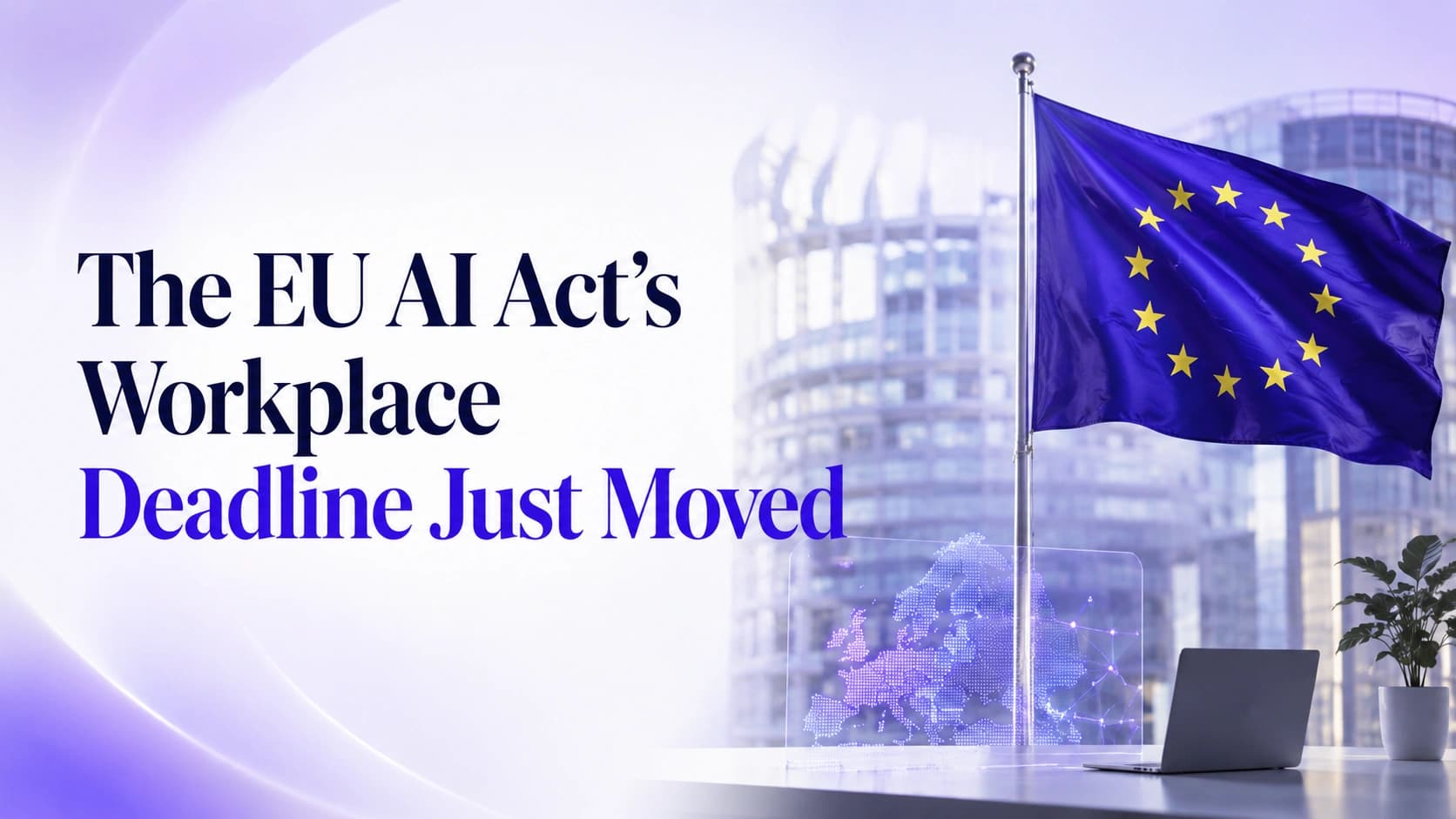
AI inside the workplace is different from AI used to summarize a public document or draft a general email. Employment-related workflows can influence manager attention, pay, promotion, and trust. That makes governance a product requirement, not a policy footnote.
The safest starting point is to treat Catch Up AI as manager support, not automated judgment. AI should help teams understand context earlier and act more responsibly when people decisions are involved.
The EU AI Act has made one thing clear for HR leaders: AI used in employment settings needs careful design, documentation, and human accountability. Even companies outside the EU are paying attention because global teams rarely want one standard for Europe and a weaker standard everywhere else.
This does not mean HR teams should stop using AI. It means they need to understand where risk lives and how to design workflows that employees can trust.
HR use cases are sensitive because they connect information about people to decisions about people. Hiring, promotion, performance management, retention, workforce planning, and manager coaching all require a higher standard than generic productivity AI.
The risk is not only regulatory. It is also cultural. Employees need to know whether AI is helping a manager prepare a better conversation or quietly scoring them behind the scenes.
The first question should not be "Is this AI compliant?" The better question is: "What role does AI play in the workflow?"
If AI drafts a review summary from manager notes and relevant context, the risk profile is different from a tool that automatically ranks employees. If AI surfaces a pattern for a manager to investigate, that is different from a system that decides who is promotable.
This is where AI governance belongs in the buying process. HR should understand purpose, data sources, visibility, controls, and limits before rollout.
Human accountability has to be more than a sentence in a policy. It needs to show up inside the product.
Managers should review AI outputs before they are used. HR should be able to audit sensitive workflows. Employees should have clear information about what data is used and what decisions are not automated.
A product like Review Now AI should be evaluated not just on draft quality, but on whether it keeps managers accountable for the final review.
One of the most important distinctions is between supporting managers and monitoring employees.
A tool that helps a manager prepare a better 1:1 from goals, feedback, and work context is not the same as a tool that tracks screenshots or time online. But employees will not automatically see the difference. HR has to design and communicate the difference clearly.
At minimum, HR should document five things:
These documents should be practical enough for managers to use. A policy that only legal can understand will not protect the workflow in daily decisions.
Ask vendors to show a real workflow, not only a slide deck. Where does the data come from? What does the manager see? Can the manager challenge the output? Does the system show uncertainty? Can HR audit the output later?
For HR teams, the strongest vendors will be clear about what the product does and does not do. Vague answers create risk.
Workplace AI will succeed only if employees believe the system is being used to improve support, fairness, and manager quality. If the system feels hidden, punitive, or overconfident, adoption will suffer.
That is why Autonomous workflows should be framed around manager readiness, not automated employment outcomes.
Yes. AI used in employment-related workflows can require stronger governance, documentation, and oversight.
Continue reading more insights from CatchUp AI