Employee Attrition Prediction Software: How It Works and How to Choose One
Learn how employee attrition prediction software works and compare 8 buying criteria, from data quality and accuracy to privacy and retention workflows.
October 23, 2026
Generic praise feels nice, but it rarely changes performance. Learn how specific recognition reinforces the right behaviors, supports retention, and scales across teams.

"Great job" feels good for a moment. Then it disappears.
The problem is not that praise is bad. The problem is that most praise is too vague to change what happens next. A person hears it, smiles, and moves on without knowing which behavior mattered, why it helped, or what they should repeat next time.
That is where specific recognition becomes a performance tool, not just a culture ritual. For teams using Catch Up AI, recognition is most valuable when it captures real contribution while the work is still fresh, connects that contribution to impact, and gives managers better context for future coaching, reviews, and retention conversations.
Generic praise says someone did well. Specific recognition explains what they did well enough to make the behavior repeatable.
Generic praise like "great job" has limited impact because it does not tell someone what to repeat. Specific recognition names the action, the timing, and the business or team outcome. That makes the feedback easier to remember, easier to act on, and more useful for managers who want recognition to support performance instead of simply creating a nice moment.
Vague recognition has a structural problem: it does not contain enough information.
When a manager says "nice work," the recipient has to guess what part of the work was valuable. Was it speed? Quality? Ownership? Collaboration? A difficult tradeoff? The way they handled a customer? The way they helped a teammate? Without that detail, praise becomes emotional encouragement rather than behavioral guidance.
This matters because people do not repeat compliments. They repeat behaviors they understand.
Generic praise also fades quickly. It is easy to remember that someone said something positive. It is much harder to remember what the praise was actually about. A week later, the employee may remember the tone but not the useful lesson.
That is why a recognition program can technically be active and still fail to move performance. If recognition is frequent but vague, it can become recognition theater: visible, positive, and almost useless for learning.
Specific recognition has three parts.
The action. Name exactly what the person did. Not a personality trait. Not a broad value. A visible action or decision.
The moment. Tie it to a recent event, project, meeting, customer issue, code review, handoff, or team interaction.
The impact. Explain why it mattered to the customer, team, project, manager, or business.
A vague version sounds like this:
Great job on the client call.
A specific version sounds like this:
The way you handled the pricing objection on Thursday kept the renewal conversation moving. You answered the concern without becoming defensive, then brought the discussion back to the customer's original goal.
The second version gives the person something concrete to repeat. It also teaches the team what good judgment looks like in that situation.
In engineering, generic praise sounds like this:
Nice work shipping the feature.
Specific recognition sounds like this:
The way you caught the race condition in the payment retry logic during code review saved us from a likely production issue during a busy release week.
The difference is not just wording. The specific version names the behavior: catching subtle failure modes before they reach production. That is the behavior worth reinforcing.
In operations, generic praise sounds like this:
Great job keeping things running.
Specific recognition sounds like this:
You flagged the vendor invoice mismatch before reconciliation, which kept the finance team from unwinding three weeks of ledger entries.
In people management, generic praise sounds like this:
Thanks for handling that difficult 1:1.
Specific recognition sounds like this:
The way you gave Sam room to explain the missed deadline before responding helped turn a tense conversation into a clear follow-up plan.
That last example also connects recognition to manager effectiveness. Good recognition does not only celebrate outcomes. It teaches people which behaviors protect trust, reduce confusion, and help teams work better.
Recognition is often treated as a soft culture topic. That framing is too small.
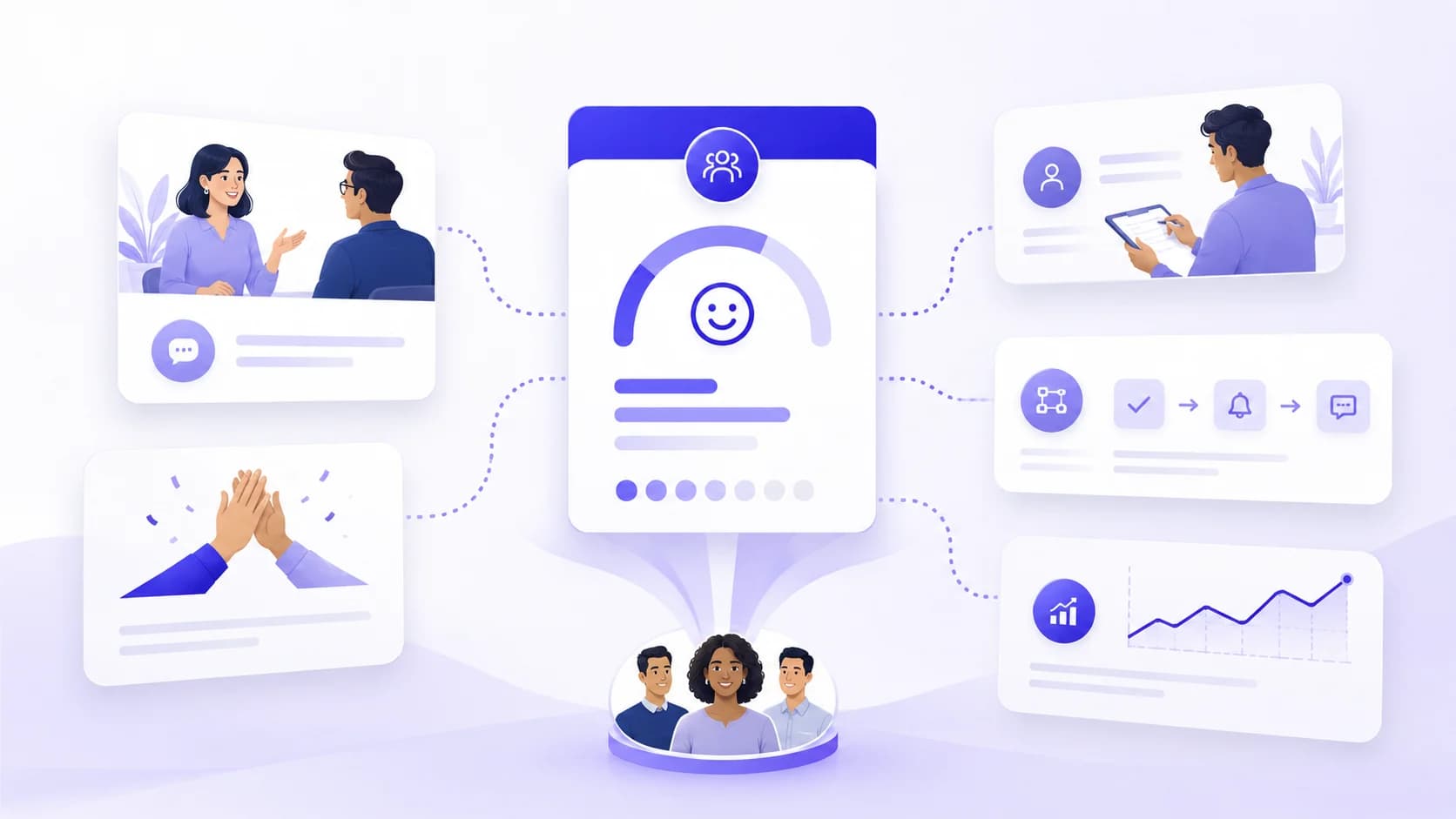
Specific recognition affects performance because it sharpens the signal of what the organization values. It shows employees which actions matter. It helps managers notice invisible work. It gives HR and People teams better evidence of contribution over time.
It can also support retention. Employees rarely leave because of one missed compliment, but repeated under-recognition can become part of a broader pattern: lower belonging, less manager connection, weaker feedback, and less confidence that their work is visible. That is why recognition belongs near retention strategy, not just engagement programming.
When recognition becomes specific and timely, it can work alongside flight risk intelligence. The goal is not to label people or predict decisions. The goal is to help managers notice when contribution, feedback, engagement, and support are drifting before the relationship weakens.
Recognition also complements survey programs. Surveys capture what employees say when asked, but recognition captures what managers and peers notice in the flow of work. Pairing recognition with signals around quiet disengagement gives teams a fuller picture: how people feel, what they contribute, and whether their work is being seen.
Specific recognition is harder to sustain than generic praise because it takes more thought per instance. That is exactly why most teams drift back to vague praise, even when everyone agrees specificity is better.
The fix is not to ask managers to write longer messages. The fix is to make the right detail easier to capture.
Avoid recognition that sounds like a personality label:
You are amazing.
Use recognition that starts from a real action:
You clarified the project risk before the deadline moved, which helped the team reset expectations early.
The second version is more useful because it connects recognition to behavior.
Recognition loses value when it is too far removed from the work. Managers do not need to recognize everything in real time, but they should avoid saving all appreciation for quarterly reviews or company meetings.
A good rule: if the moment still has enough context to explain clearly, it is still fresh enough to recognize.
Specific recognition becomes stronger when it includes the outcome.
Ask:
The answer usually gives the recognition its value.
Managers do not see everything. In cross-functional work, peers often see the quiet contributions first: the person who unblocks a teammate, reviews work carefully, improves a handoff, or notices a risk before it becomes visible.
Peer recognition helps reveal work that formal performance systems can miss. It also makes recognition less dependent on one manager's memory.
Specific does not mean exaggerated. Recognition should not sound like a performance review paragraph every time someone helps. A simple sentence can be enough when it names the action and the impact.
The goal is not more ceremony. The goal is better signal.
Specific recognition is not about making managers sound more polished. It is about helping them notice and reinforce the right things.
When recognition is specific, it becomes useful beyond the moment. It gives employees clearer feedback. It gives managers better examples for coaching. It gives performance reviews stronger evidence. It helps HR understand which contributions are visible and which may be getting missed.
This is especially important in hybrid and distributed teams, where the loudest work is not always the most valuable work. A teammate may be quietly improving quality, reducing risk, or helping others move faster without showing up in a dashboard or meeting recap.
Catch Up AI's approach is to make recognition more grounded in real contribution and easier to act on while the moment is still fresh.
Use this structure when you want recognition to reinforce performance:
I noticed [specific action] during [specific moment]. It mattered because [impact]. Please keep doing this when [future situation].
Example:
I noticed how you summarized the tradeoff in yesterday's roadmap review before the team jumped into solutions. It mattered because it helped everyone align on the actual decision. Please keep doing that when the discussion starts moving too fast.
This is short, human, and specific. It does not feel like a script because it is grounded in something that actually happened.
Generic praise and specific recognition are not the same tool.
Generic praise creates a pleasant moment. Specific recognition creates a useful signal. It tells people what to repeat, helps managers reinforce better behaviors, and gives teams a clearer record of contribution over time.
The strongest recognition cultures do not simply praise more often. They recognize more precisely.
If your team wants to turn everyday contribution into specific recognition and stronger manager action, book a demo to see how Catch Up AI can support your people workflows.
Generic praise usually does not name the specific behavior that created value. Without that detail, employees may feel appreciated, but they do not know what to repeat.
Continue reading more insights from CatchUp AI